La historia

Stenton
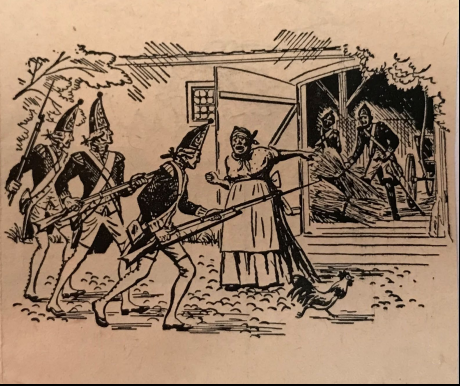
Representación de Dinah convenciendo a los soldados británicos en 1777 para que arrestaran a los pirómanos de Stenton House mientras reunían combustible para el incendio que planeaban provocar.


Construcción del túnel/alcantarillado de Wingohocking Creek, c. 1890-1905.

Vagón de cenizas que transportaba cenizas de carbón a Logan Triangle, c. 1909.

Casas destruidas por la explosión de gas de 1959.

El hundimiento de las casas en 1986

Plan Maestro Propuesto, 2012

Proyecto de instalación de baloncesto juvenil, 2014
Propuesta de centro comercial del Grupo Goldenberg, 2015


Triángulo de Logan, 2026
La iglesia bautista House of Faith es uno de los tres edificios que aún se conservan en las 17 manzanas de Logan Triangle. Fue construida sobre roca madre, no sobre relleno de cenizas de carbón.
Three hundred years ago James Logan, William Penn's secretary and a Quaker, chased away Lenape tribal members and claimed 500 acres 7 miles north of Philadelphia along the Wingohocking Creek for a plantation. 'Stenton', his Georgian plantation house completed in 1730, was built and operated using the labor of indentured servants and slaves.
The plantation had slaves from 1730 to 1776 when Quakers abolished slavery within their membership. The next year, a former Stenton slave named Dinah, who had been a slave at the estate for 50 years before being manumitted by Logan, saved the Stenton house from being burned down by the British.
The Logan family kept the property for six generations, selling off parcels along the way. Beginning in 1879, Philadelphia began channeling the Wingohocking into brick sewer pipes. The Wolf brothers bought the Logan Triangle area in 1909 and used it as an industrial dump, ultimately filling in the creek's ravine with up to 40 feet of toxic, uncompacted coal ash and debris. Roads aligning with adjacent streets were built over the unstable fill. By 1920 stone row houses were constructed with a predominately white population moving in.
The houses started to crack as the fill below began to sink. Over a short period in the 1950s, the residents, knowing their houses were sinking, sold their houses to predominately Black families and headed to the suburbs. Many Black families invested their life savings and took on sizable mortgages to fulfill their dream of finally owning a home. It is highly unlikely they were informed of the severe unstable toxic fill below their new homes.
The first of many fires were in 1959. A gas main was cracked by the subsiding fill, and five homes exploded and burned. The city did not investigate, and life went on in the Triangle, as houses continued to sink and utility lines continued to leak. With a Black population, Logan Triangle had become a forgotten place, far from the center of the country's prosperous 4th largest city.
Fires recurred in 1986 when a trio of explosions rocked more houses in Logan Triangle causing extensive damage. After these explosions, the City hired experts to determine what lay below the surface and it was confirmed that nearly 1000 houses were built on coal ash. The City pooled state and federal money to compensate and relocate the homeowners. It took 16 years to get everyone relocated, and then the entire 43-acre neighborhood, 957 homes, was demolished.
In 2007 the first Request for Proposals (RFP) came out from the Philadelphia Redevelopment Authority (PRA) with the hope that a private developer would take interest in Logan Triangle. In 2008 the Logan Community Development Corporation (CDC) was formed.
In 2012 the City commissioned a master plan for the Triangle, with much community input. In 2013 the CDC commissioned a master plan for a much larger area including and beyond the Triangle, with even more community input. A shopping mall was proposed, a community basketball facility was proposed, and the community was engaged, excited and hopeful.
The Logan CDC folded in 2014. The Goldenberg Group walked away from the shopping center idea in 2023. The City issued another RFP in 2023 that went nowhere. And in 2026, the City proposed a modular housing factory in the Triangle that, again, has failed to materialize.
The common element to these failed proposals was that all ignored, or at best downplayed, the 'elephant in the room': the structurally deficient and toxic fill under the Triangle.
Logan Triangle is a part of Philadelphia that has experienced decades of malign neglect and 40 years of broken promises and dashed hopes. The community is understandably feeling hopeless, forgotten and skeptical of anything ever coming to the Logan Triangle. The Triangle's status is causing a blighting influence and a sense of despair and cynicism in the surrounding neighborhoods.
But the community remains resilient. Two vibrant churches remain, and there has been a community garden project in the Triangle.
Meanwhile, the Stenton plantation house still stands, surrounded by Black and Brown neighborhoods with poor air quality, low graduation rates, high unemployment, high gun violence and high poverty, looking out over the 17 garbage-strewn blocks of the Logan Triangle.
Triángulo de Logan, 2026